Sunday, May 31, 2015

Review: “Attack the Light” The Steven Universe RPG

Guest review by Chris Chinn

This review was funded through a partnership with ArsenalForDemocracy.com

“Attack the Light” is a mobile game on Android & iOS, going for $2.99.  It’s about 4-5 hours of casual RPG gameplay with great production quality.  If you’re a Steven Universe fan, it’s a fun game worth checking out. (For those not familiar, Steven Universe is a Cartoon Network show in its second season.)

First off, the big disclaimer: the in-game story is pretty non-existent.  You get about all the depth of a 10-minute filler episode from Steven Universe stretched over several hours of gameplay.  So if you’re coming to this looking for lore and character development, you’re not going to get it.  If you’re here to see Garnet rocket-punch monsters – and that’s enough for you – you’ll have a great time.

You have turn-based play, with a timing-based setup for attacks and defenses - tap the screen at the right time, you do extra damage or you block most of the damage, respectively.   This is a game mechanic that was first brought to us on the Super Mario RPG back in the days of Super Nintendo and has seen occasional use in other games. It remains a great, if under-utilized, setup for a lot of RPGs – and keeps it fun and engaging.

Unlike the usual JRPG setup where each character gets 1 action, the game instead gives your team a number of Stars every turn, which you spend to use actions from any of the Gems or Steven himself.  This actually sets up some interesting choices: do you do a single big attack, do you do several small ones? Which attacks are best suited to the types of enemies you are fighting?  Should you break the armor of the tough guys first, or clear out the small support monsters?   You can also save some unspent Stars for the next round, allowing you to pull off bigger attacks or waves of heavy hits.

The other fun tactical element is that a Gem has to have a certain amount of health (“Harmony”) to use their big attacks. If they’re too hurt or weak, your special moves will be locked out.  This forces you to pay attention to defense as well as offense; you want to be well healed up between and during fights.  
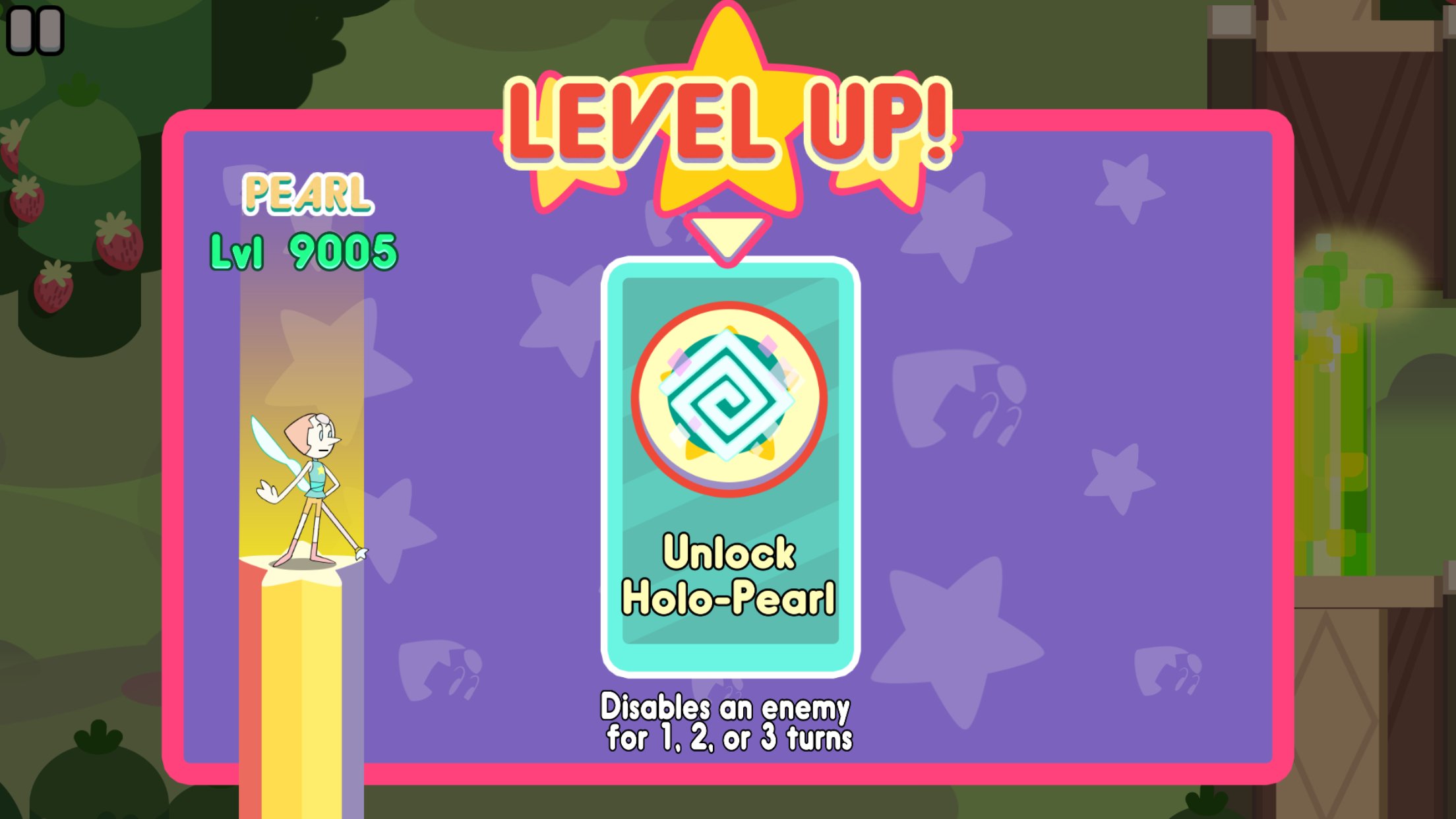
There’s a few bits of character building: each level you can pick from 3 different options to upgrade the Gem in question – a better special attack, improve stats, and so on.  Each Gem also can equip “badges” – the usual JRPG accessory that gives you stat boosts or special modifiers on your attacks or defenses.

The maps are simple but clean.  There are a few hidden objects that just require you pay attention, and a few combination puzzles which only require that you write down the solution on the map when you run across it.  

The production quality is pretty great.  The simplified character designs fit very well with the Steven Universe art from the show, and the voices and music are high quality as well.  Most of the dialogue is text box, but the characters have many phrases from the show used to highlight certain things like finding secret rooms, or leveling up.  The animation is fun and the controls are pretty great for touchscreen gaming.

All in all, I give this a 3.5 out of 5.  The game is a fun game, and easily worth the cost, but it lacks the usual lore building and character development bits you’d usually get in a Steven Universe TV episode - which is the part that hurts it.  As I played through, I realized you could have slapped any other characters from any other comic, cartoon, or TV series and you’d pretty much only change the labels to a lot of the mechanics in play.

Saturday, January 10, 2015

The NES Max Provides A "Powerful" Option For Retro Gamers

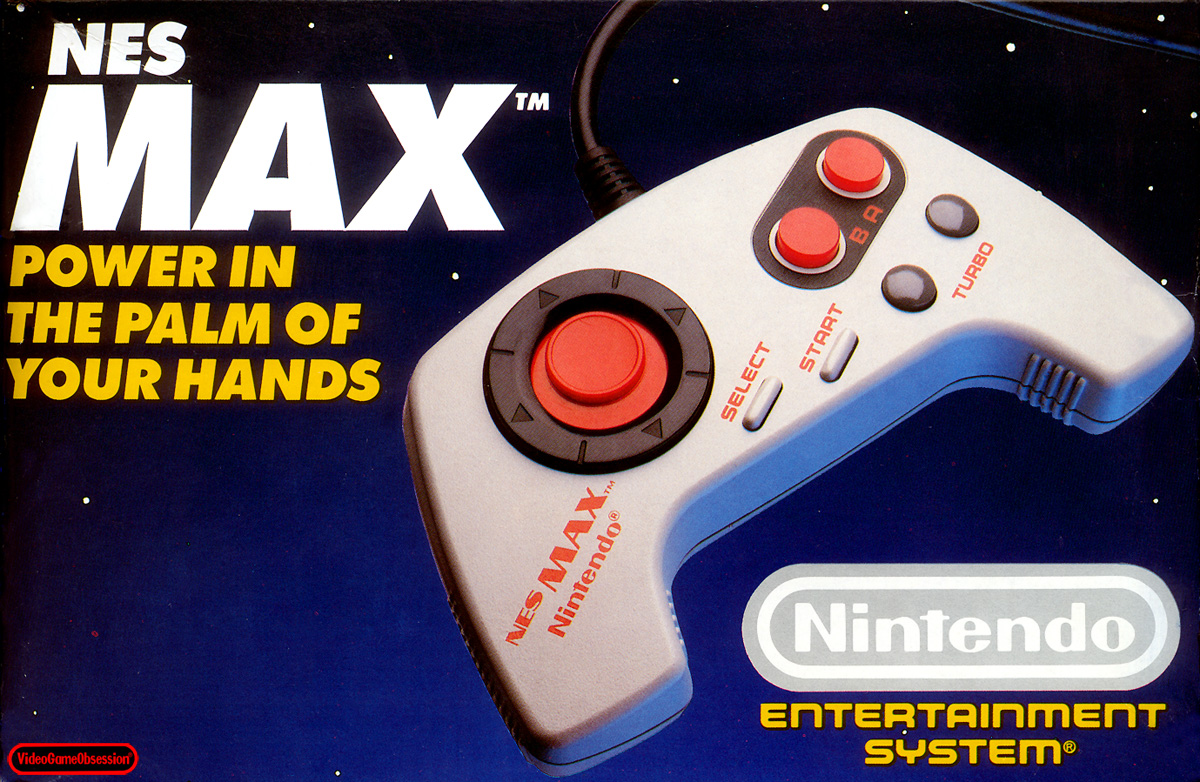
Other than their well known roster of characters, Nintendo's gaming experiences have been equally hallmarked by the great controllers they employ. This was especially evident by the number of control options available for the NES. In addition to the standard control pad, Nintendo also sold two more official controllers in the arcade styled NES Advantage and a smaller controller called the NES Max. The NES Advantage, with it's arcade styling, became instantly more popular. The NES Max has however become the go to aftermarket controller for a lot of retro gamers who want a little more bang for their button press. I finally got my hands on one and while it works great with some games, it isn't a perfect fit for others.

The first thing a gamer will notice about the NES Max is the lack of an actual control pad. Instead there is a little red disc that the player slides in different directions to move their character. Ideally, the disc will function much like the standard cross directional controls on a stock NES controller. This didn't seem to be the case with the NES Max that I was given to review, and the controller didn't feel as responsive in side scrolling action games as one would like. It does, however work quite well with vertically scrolling action games, racing games, and to a lesser extent, sports games.

The NES Max's turbo buttons are functional and work just as you'd expect. The rate of fire can't be adjusted like the NES Advantage, and it also lacks the rapidly pausing "slo mo" feature. While this feature was quite popular with gamers when it was new and shiny, in hindsight it was a bit annoying and the lack of "slo mo" in the NES Max isn't a big deal.

All in all, the NES Max is a solid controller that, while not perfect, is a solid choice for the gamer looking for a secondary option for his NES controller needs. There were other controller options for the console, but Nintendo provided two quality choices in the NES Advantage and NES Max. It may not work perfectly for Contra or Mega Man, but for games like 1943, Commando, or Kung Fu Heroes it's a great fit.

*Shout out to the good folks at The Classic Gamer for providing the controller for this review.

Sunday, December 28, 2014

Capcom's Ten Game NES Leadoff

Today's post takes a look at Capcom's initial ten releases for the NES and how they set the tone for the publisher's 8-Bit success.


Friday, September 26, 2014

#GamerGate: Righteous Crusade Or DudeBro Creepiness

I took some time off after a successful Summer Of 8-Bit and return to something called #GamerGate. I was under the impression that the hashtag was created under noble intentions, but later discovered that it was nothing more than a ruse created by 4Chan users, scumbags, and trolls to harass a female game developer.

They did a good job hiding their true intent, and by bringing up a long rumored act of publishers offering payola to game journalism sites for good reviews they called to arms a number of gamers who were already leery of these sites. The thing about the truth is that it always comes to light, and the persecution of Zoe Quinn started to feel a lot like the witch hunt started when Anita Sarkeesian went on a crusade to analyze and bring attention to many of the archaic tropes in gaming. The attacks on both women have been treated by some in gaming communities as if they are some sort of mythical creature, but the threats levied at their families and friends are definitely real. They are so real that Quinn has gone undercover in 4Chan forums and downloaded entire chat logs discussing how they will attack her.

In recent discussions with people on assorted social networks, I've discovered that some folks truly don't believe that the attacks on Quinn are the real problem, but they do believe that #GamerGate is all about exposing some secret conspiracy hatched by government organizations to censor the content of our beloved video games. This all comes off as typical tin foil hat territory, and even if there is some truth to it, that is no reason to completely disregard the blatantly horrible treatment of gamers who aren't straight white males. It does go to show that those who aren't affected by not being privileged don't recognize the problems that some people face simply for existing.

The #GamerGate situation is a microcosm of the problems facing society as a whole, but it is more a situation that again makes me ashamed to be a gamer in some instances. If your crusade was truly about developers and publishers paying off gaming journalism sites for positive reviews, you would point out infamous examples of said practice like former gaming stalwart Gamepro Magazine offering positive reviews in exchange for advertising space. If someone is to ever want to really have that discussion, I'm all in for it. Until then, I advise you all to not believe the hype behind #GamerGate.

Friday, August 1, 2014

The Summer Of 8-Bit 3.0 (Finale): Mega Man 3

Today's video marks the end of this Summer Of 8-Bit with a look at Capcom's action masterpiece, Mega Man 3.


Thursday, July 31, 2014

The Summer Of 8-Bit 3.0: Ninja Gaiden III

Today's video takes a look at Ninja Gaiden III from Tecmo.


Wednesday, July 30, 2014

The Summer Of 8-Bit 3.0: The Adventure Of Link

Today's video takes a look at Zelda II: The Adventure of Link from Nintendo.