Monday, October 25, 2010

Nintendo Weaves A Hit With Kirby's Epic Yarn


Nintendo has a knack for taking characters that should only appeal to little kids and dropping them into great games that appeal to gamers from all walks of life. They've been doing it since the early 80s, and I honestly don't see it slowing down anytime soon. Even when they've come under fire for abandoning its core audience in favor of casual gamers, Nintendo answered back with games that could be qualified as classics. 2010 has been an interesting year for Nintendo with the release of several big games for their console, all aimed at turning around that casual games image that Nintendo was stamped with early in the Wii's life. The latest of these games is Kirby's Epic Yarn, and I can honestly say, this games is an absolute joy to behold.


The game starts off with a great cutscene that starts in normal cartoony style, and as usual, Kirby is hungry. His hunger leads him to eat a tomato that belongs to a sorcerer. The sorcerer casts a spell on Kirby that pulls him into a tube sock hanging around the sorcerer's neck. This sock, strangely enough, is a portal to a world called Patch Land. when arriving in Patch Land the new art style kicks in, and makes the observation that the ground "feels like pants". Kirby also realizes he can no longer use his traditional vacuum ability in this new world. He can, however transform into a multitude of vehicles and animals, which he immediately does to rescue Prince Fluff from a monster. Fluff explains that the same sorcerer that trapped Kirby is the same one that has stolen the magic yarn, therefore unraveling the pieces of Patch Land. Kirby agrees to help, and this is where we take over.


Epic Yarn is as old school inspirit as you'll find in a modern video game, and it ranks with New Super Mario Bros. and Battle Kid as one of the better modern platformers around (writer's note: you owe it to yourself to play Battle Kid. It's a great reason to buy an NES, but man is it tough.). With the exception of having to occasionally tilt the Wii Remote to aim a projectile, it pretty much works like an NES game. During the game, Kirby will encounter some inventive bosses, which must be tackled in different ways. Getting to those bosses is a blast with Epic Yarn sporting some of the best level design in a platformer in a very long time. There are a variety of hide and seek challenges, where you'll have to navigate a level and find a hidden character at the same time, collecting unlockable content, and some great level manipulation involving the patchwork arts and crafts game design that all blend to make this game a lot of fun to play whether in single player or two player co op.


If I had any gripe with Epic Yarn, it would be that the game is a bit on the easy side. You never die during a level, but you will lose beads, which will cost you in terms of completion percentage. the lack of ridiculous difficulty did not diminish the game's overall appeal, though. I mean, if I wanted to feel pain on my Wii in a great game, I'd play Sin and Punishment: Star Successor. All in all, Kirby's Epic Yarn proves that even in this day of Modern Warfare and Halo. The Wii has had a lot of solid releases this year, and this one can be added to the list.

Friday, October 22, 2010

Bionic Commando: A True Swinger


I recently discussed the immense differences between the Arcade and NES versions of Strider, this wasn't the first time Capcom altered the source material of an Arcade game to flesh it out for a home console. Most folks may not remember the Arcade version of Bionic Commando, but it was a brutally hard platformer, while it's NES counterpart contained the same play mechanics, but also featured a map component that gave players specific objectives for certain missions. The NES version has been considered a timeless classic, with a remake, entitled Bionic Commando: Rearmed, being released a few years ago. This remake was developed and released in conjunction with a sequel to the NES game that was released on PS3, Xbox 360, and PC. Almost as expected, nostalgia won out, and Rearmed was praised by critics and gamers alike, while the sequel, simply titled Bionic Commando, received mixed reviews. Most gamers who trace their roots in gaming back to either before or just after the crash of 1983 can remember games like Bionic Commando with great fondness, mainly because this was a time when game manufacturers could not afford to waste money on bad video games. It was a time when consumers were better informed about video games they spent money on (which is ironic considering how many different "experts" are on the Internet now). I advise folks who aren't old enough to remember Bionic Commando in its earliest forms to give it a try, and get to know your roots.


Thursday, October 21, 2010

Strider: One Story...Two Completely Different Interpretations


The late 80s was a great time to be a gamer, especially in arcades. Capcom was undoubtedly one of the best publishers out there, and their arcade division was no different. In 1989, Capcom released one of it's great triumphs in arcade gaming, Strider. the player controls Hiryu as he attempts to defeat "The Grandmaster" and free the world from his tyranny. This game featured tight controls, a great soundtrack which featured speech from different languages, which gave the game a truly international flair. Strider proved to be one of Capcom's biggest hits, and it received multiple ports to home consoles. Then there was the puzzling decision that led to one of Capcom's most polarizing game ever.

The NES version of Strider started out as three pronged effort between Capcom and Moto Kikaku. This effort included the NES version which specifically followed the storyline of a manga, the arcade version, and the aforementioned manga(for the uninformed, manga is pretty much a Japanese Comic Book. Most anime starts it's life as manga.). Since the NES version seemed to follow the plot of the manga more than the arcade version did, and since the manga never saw American shores, most gamers were confused as all hell as to what was going on in the NES version of Strider. A lot of confusing backtracking takes place in the game, along with a lot of item collection that turned fans of the arcade game off. In my opinion, the NES version of Strider wasn't necessarily a bad game, it just strayed so far from the arcade game that it ended up turning a lot of gamers off.

The NES version is simply a distant memory for most gamers now, and the arcade game is as popular as ever, especially with Capcom's reissue of it as part of their "classics collection" series. Strider is easily one of the games that put Capcom on the map, and without a doubt both versions should be experienced by anyone who can hold a controller.


Wednesday, October 20, 2010

Mappy: A Good Game Just Because...


Namco was responsible for a lot of legendary arcade games during the "Golden Age", but one of their most charming, endearing, subtly tough, and downright fun games was a little platformer named Mappy. Namco didn't released it to US arcades, that was handled by the late great Bally/Midway, but their inclusion had no impact on the greatness of this game. You didn't need a game to do a whole lot in those days to be great, and Mappy took the few things it did and it did them well. it didn't need to be ultra violent, nor did it need to hold a player's hand. That's why a game like Mappy has a hard time surviving in this day and age, most gamers need some sort of gimmick to draw them in. Whether it be motion control, being attached to some "hot at the moment" IP, or being ridiculously bloody for no reason. Games like Mappy would struggle today because the only gimmick is that it's a solid video game. For some reason, Namco never ported Mappy to the NES, though there was a version on the Famicom, but then again, they did the same thing with Dig Dug. For what it's worth, Namco did make a console only sequel called Mappy-Land, and Taxan published it in the US. Based on personal experience with Mappy-Land, I can't really say that was a good thing though. Thankfully, the original game is available in a lot of places now. You can track down Mappy on the various versions of Namco Museum, on assorted plug and play joysticks, and on Nintendo's Virtual Console. Mappy is a dope game because it didn't need to do anything else but be a dope game. If more developers could apply that same philosophy to their work, I'm sure far less shovelware would exist on current consoles.


Red Faction: The Revolution Was On PS2


I know most of my readers have seen Total Recall, The Arnold Schwarzenegger movie about a revolution against oppressive rulers on Mars. It is truly a Sci Fi classic. The video games attached to it, not so much. For a long time there really wasn't a console game that took the spirit of Total Recall and made it feel new, fresh, and evolved for folks who weren't fans of the movie. Then, seemingly out of nowhere, Volition develops a Martian masterpiece, and THQ publishes it. That game was Red Faction.

The plot of Red Faction centered around a guy named Parker who went to Mars after being sold on a new start by the Ultor Corporation. Instead of riches and adventure, though, folks were shoved into mines, beaten and experimented on by the good folks at Ultor. Slowly but surely, the miners began to plot an overthrow of those in power, and that's when Parker got tangled up in the whole mess.

Red Faction, in a lot of ways reminds me of the original Half Life, especially in it's completely cinematic feel, but that's where those similarities end. Red Faction's "Geo Mod" technology gives that game a deeper feel because of the ways a player can manipulate the environment to avoid groups of enemies. Also, the variety of vehicles and weapons in Red Faction is a pretty good for a FPS in that day and age. If that multiplayer on the console version wasn't local only, it would've been a true pioneer, but as it stands Red Faction paved the way for a lot of story driven games in the FPS genre. It's a great game, and since it came out in 2001, it's dirt cheap. You kinda owe it to yourself to give this pioneer a try.


Monday, October 18, 2010

Let's Get This Clear...Video Games Are Art!!

There has been an ongoing debate about the status of video games as works of art. For some reason, film critic Roger Ebert has long cited that video games are not art, but I, along with many other gamers contend that if they aren't, then motion pictures cannot be considered art either. A big problem with the "video games as art" argument is that most of the folks on both sides of the argument are only looking at a game's aesthetics as the basis for declaring or disputing a game's status as art. I've taken a bit of a different path in my assessment and would like to share a few games that I personally consider works of art.


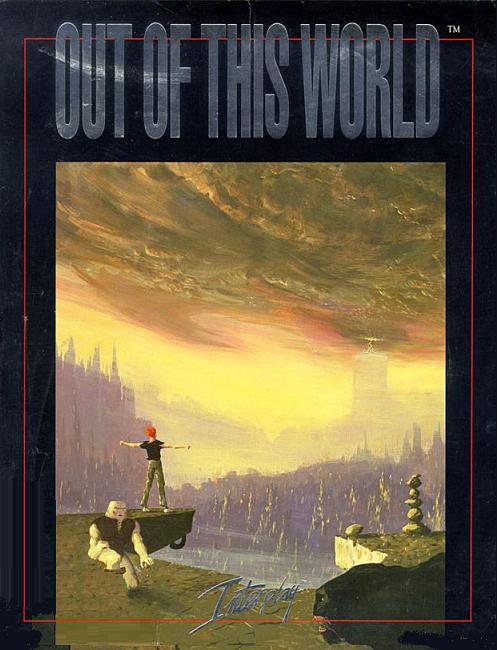
Out Of This World-Delphine Software-Interplay: I remember playing this for the first time on the SNES. I rented it because they didn't have Super R Type at the video store I went to, but I'm glad they didn't. This game was and is still beautiful both in gameplay and graphics. It reminds me of a painting, with several colors blending together almost effortlessly to create the game's backdrops. It also handled well, as character animations were extremely lifelike for the time and controls were very responsive. Had the sequel, which was created despite there not being any involvement from Eric Chaci( the original game's creator), not been subpar in terms of gameplay, I could have said the series as a whole.


Rez-United Game Artists-Sega: Sega has done some remarkable things with rail shooters before(Space Harrier and the Panzer Dragoon series), but nothing they did with those was as utterly awesome as Rez. Tight control, a visual style that beautifully blended polygon graphics with almost vector looking wire frame graphics, and one of the best Techno/Electronic soundtrack I've ever heard in a game all blended together to make complete magic. A game called Children of Eden was announced for Xbox 360, and after watching that demo during E3, I can say that one may be even more of a museum piece than the original.


Killer 7-Grasshopper Manufacture-Capcom: One of the "Capcom Five", Killer 7 was probably the most controversial of those games. It was hated by critics who couldn't get around the strange play mechanics, but it has indeed become a cult classic, and one the most stylized games of the last decade. It also helped make Suda 51 a household name among hardcore gamers.


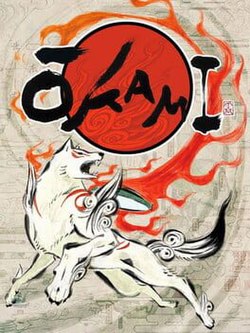
Okami-Clover Studio-Capcom: Okami is as fun as it is beautiful, and it was one of the few games from the last system generation where the outward beauty(graphics, animation, etc.) is matched by the spot on gameplay.


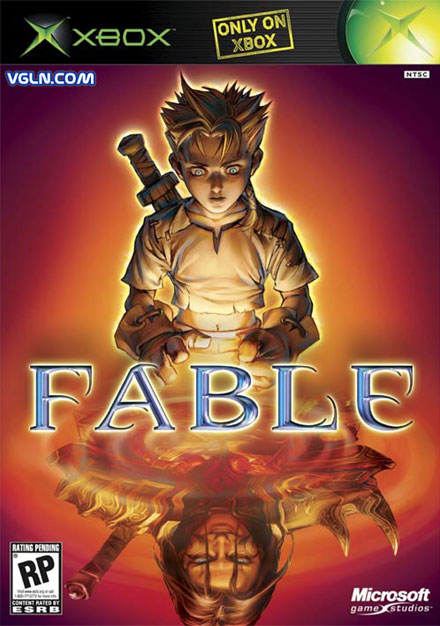
Fable(series)-Lionhead Studios-Microsft Game Studios: Peter Molyneaux's breakthrough RPG series wasn't a work of art because it looked good, but it played wonderfully, and had some of the most open ended gameplay seem on a console game. The morality choices a player is faced with in this games are as far reaching as determining whether or not to have multiple families, killing livestock, and any other things that can be cooked up in a player's mind. Fable III is set to release later this month, and hopes are high that it contains every bit of debauchery as the first two games in the series.


There are many other more obvious examples of games that can be considered art: like Shadow of the Colossus, Bioshock, Snatcher, Portal, and Dragon's Lair to name a few. I mainly wanted to focus on a handful that I have observed to be museum worthy during my time as a gamer. Naysayers failed to understand that all things that are now considered art were once viewed as base, crude, and childish at one point or another. Video games have evolved in much the same way as Shakespeare's writing's or Beethoven's symphonies. This just proves that critics are built to dislike anything that isn't comfortable to them, but then again, most gamers are the same way.


Sunday, October 17, 2010

Wonder Boy = Adventure Island...Or At Least That's How It Started

In the mid 80's Sega had a little game on the Master System called Wonder Boy. This game centered around the main character, Tom Tom's quest to rescue his girlfriend Tanya from Drancon. Now, This game wouldn't be at all important to video game history if it weren't for a very strange licensing agreement Sega had with original developer Westone. In the agreement, Sega retained the rights to the Wonder Boy name and the characters therein, but Westone kept the rights to pretty much everything else in the game. Meanwhile, Westone had a licensing agreement with Hudson Soft, which led to a knockoff of Wonder Boy being made. This knockoff was called Hudson's Adventure Island. After minor tweaks were made, Tom Tom was now known as Master Higgins in this new game while Tanya was now known Princess Leilani. For whatever reason, Adventure Island wasn't the original of the two games, but it fared much better commercially than Wonder Boy did. This was probably dude to Adventure Island being available on the Nintendo Entertainment System, while Wonder Boy appeared on the Master System, which was in far fewer homes. Sequels to Wonder Boy were quite different from the original, with some being essentially RPGs, completely steering away from the original hop and bop gameplay. Sequels to Adventure Island have pretty much stayed true to the original gameplay formula, and for the most part have been pretty successful. Sadly, the Wonder Boy series fizzled out after the early days of the Sega Genesis, while adventure Island continues to see sequels to this day. With the popularity of download services, the Wonder Boy/ Adventure Island series is sure to see even more sequels as technology gets better and the love of all things old school continues to thrive among gamers.